

Inspection of a reservoir bottom outlet pipe for wall thickness reductions
Special requirements call for special efforts...as was the case in the Austrian part of the Allgäu Alps, more precisely in the Tannheimer Valley, a unique mountain landscape in one of the most beautiful high valleys in Europe. As we all know, electricity comes from the socket, even in the Tannheimer Valley, but somewhat differently than in other regions. This is because most of the electricity required by the surrounding communities is supplied by two small hydroelectric power plants, both of which are powered by natural flow of the water.
ensure that this continues to be the case in the future, INSPECTOR SYSTEMS was commissioned by the power plant operator, Elektrizitätswerk Schattwald, to check the base discharge pipe of one of the two hydroelectric power plants for wall thickness reductions. A functioning bottom outlet is crucial for the safe operation of a dam or reservoir, as it regulates the water level and enables the storage area to be emptied in a controlled manner. Bottom outlet pipes are essential for the water management of reservoirs and are used when necessary for repairs, to maintain water quality or to adapt to low water levels and flooding.
Specifically, the project involved the Traualpsee hydroelectric power plant, built in 1964, a storage power plant with the ability to provide electrical power within minutes without a long start-up time when needed, in order to cover peak electricity demand or to bridge the failure of other power generators at short notice. The water for the storage power plant is stored in the reservoir (water storage facility) by inflow of meltwater during the summer months in order to produce electrical energy mainly during the snowy but water-poor winter months. Schematically speaking, it is a high-pressure power plant that utilises the difference in altitude between two mountain lakes. From the Traualpsee lake, located 1,631 metres above sea level, where the bottom outlet pipe to be inspected is located, the water is diverted and races through pressure pipes down to the turbines of the powerhouse at the Vilsalpsee lake, 1,165 metres above sea level. The water is then not discharged into the lake with a loud noise but is fed under water so that it is virtually unnoticeable to walkers.
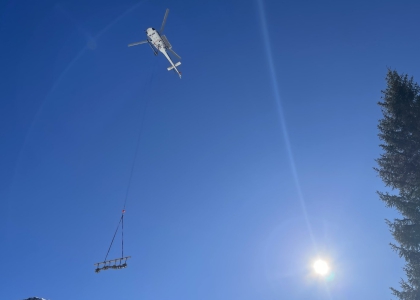
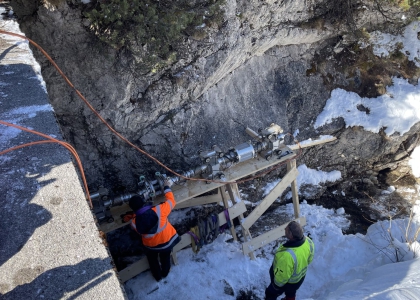
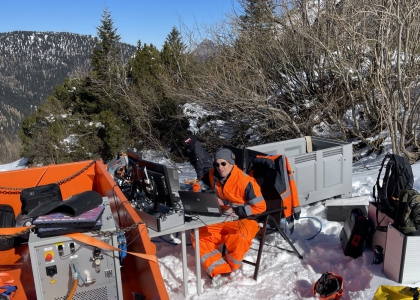
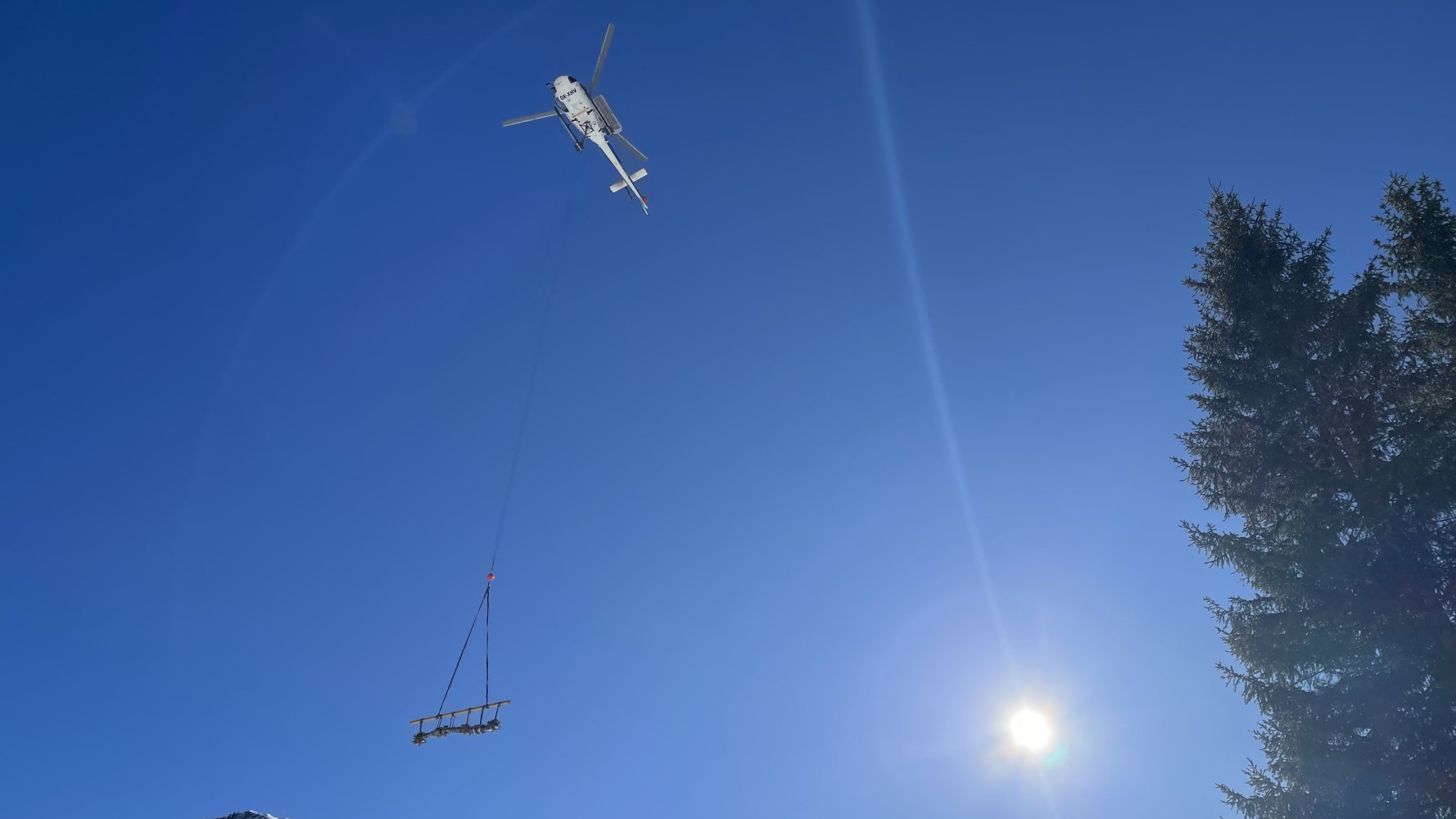
As the water supply was almost exhausted by the end of winter and rising temperatures meant that meltwater would soon be flowing, so the main drain pipe had to be inspected before spring. This was an interesting and exciting task because, although the area is a hiking paradise in summer, it is only accessible to a limited extent in winter due to snow, which meant that the entire inspection equipment and personnel could only be transported by helicopter and only in good weather. Furthermore, the inspection had to be carried out in one day. This required perfect preparation and well-organised execution. With the active and competent support of the customer, all the equipment was set up and tested in the valley the day before the inspection. The next day, we took the helicopter up the mountain early in the morning. Once at the site, the equipment was positioned above the dam wall and the inspection robot was then inserted into the pipe through a dismantled shut-off valve at the pipe outlet, which is located further down.
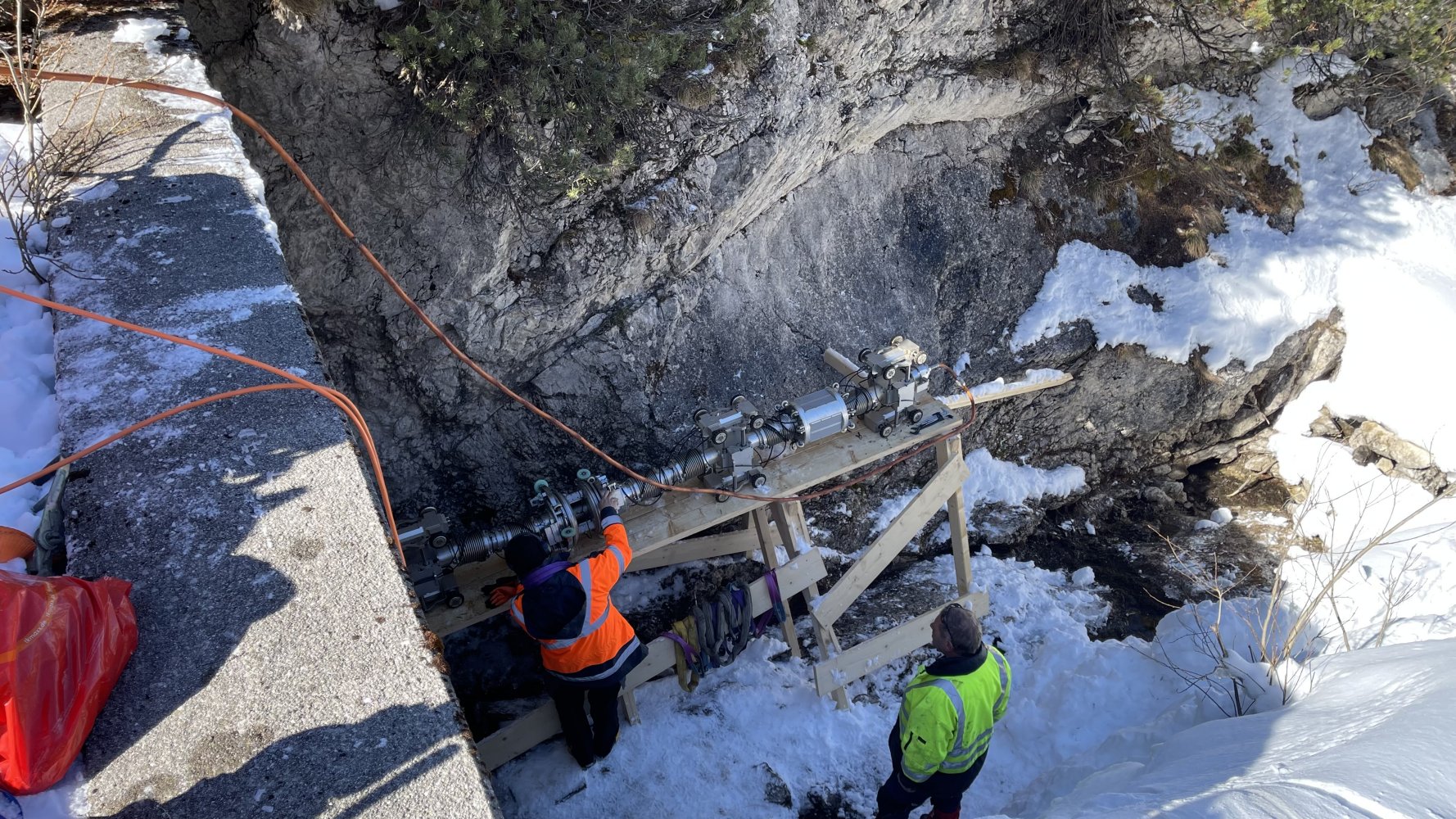
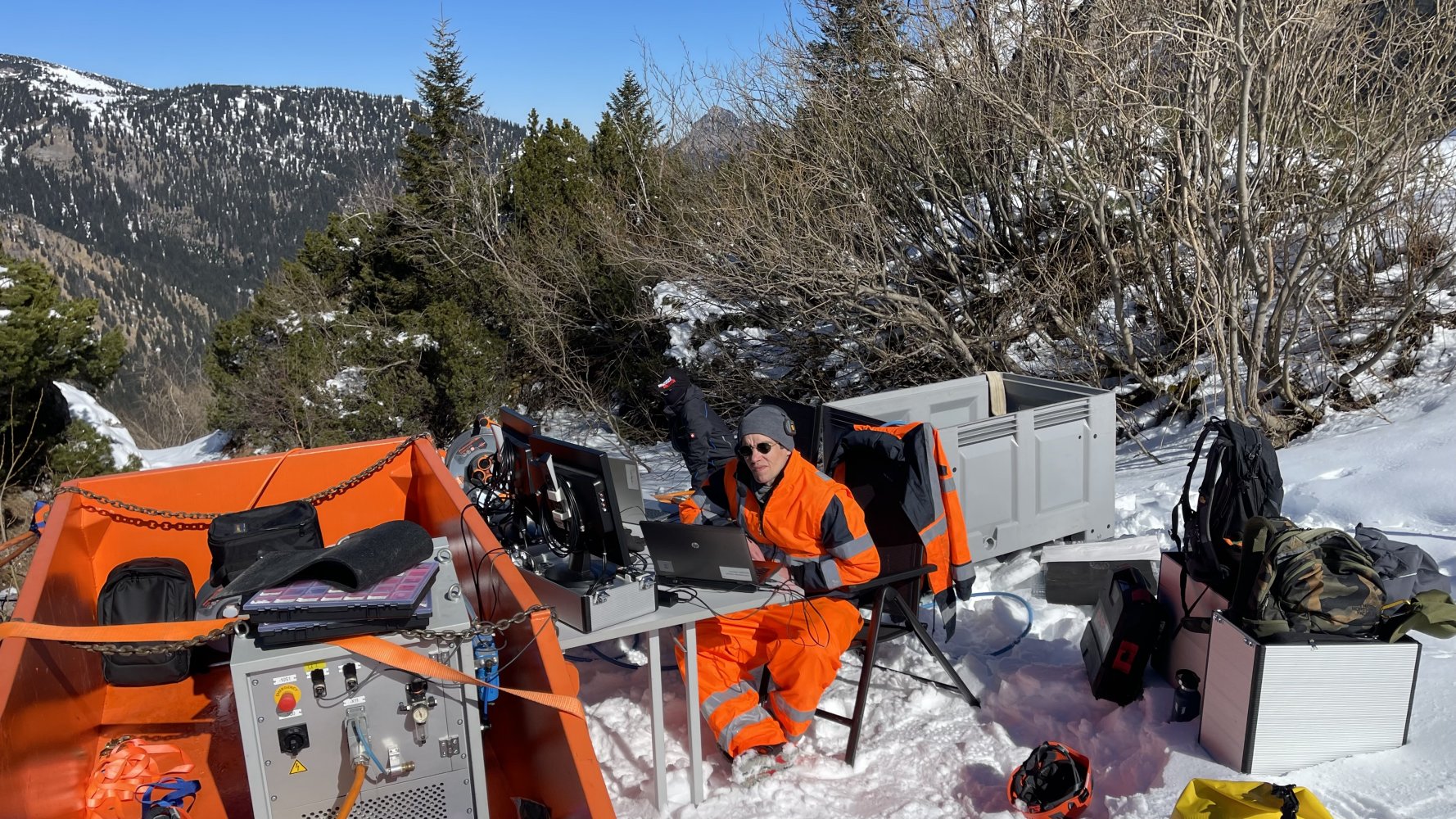
Inspection robot masters operation in snow
Particular attention was paid to the first 40 metres of the steel pipe, which had an internal diameter of 508 mm and a wall thickness of 6 mm. In order to assess the condition of the pipe as accurately as possible, a visual inspection was to be carried out at the same time to determine the wall thickness. This was no problem for the pipe robot and ultrasonic measurement technology from INSPECTOR SYSTEMS. An IS 16-20 ultrasonic inspection robot was used, which, with the aid of its drive elements, moved independently through the pipe at a constant speed after insertion and simultaneously performed a 100% ultrasonic wall thickness measurement. In addition, a high-resolution rotating/swiveling camera integrated into the pipe robot enabled a visual inspection to be carried out parallel to the wall thickness measurement.
The ultrasonic testing robots from INSPECTOR SYSTEMS, which have been in use for many years and are constantly being further developed, are high-tech testing systems for the non-destructive determination of wall thicknesses and defects in demanding or difficult-to-access pipelines. The link to the test material is a unique ultrasonic module, whose endlessly rotating ultrasonic test head scans the entire inner surface of the pipe along the test section during continuous pipe passage. In addition, a specially developed gimbal suspension system ensures that the ultrasound generated by the ultrasound heads is optimally coupled into the material to be tested. In order to be independent of external coupling media, it is also possible to supply water to the ultrasound test head from the outside. This means that the pipe does not need to be filled during the test. The ultrasonic software used provides optimal visualisation and evaluation of the ultrasonic signals for real-time display of the volume images during data acquisition. The robot mastered the unusual task with brilliance and defied the adversities of the high Alps. The model used demonstrated its high technical standard and, in particular, its robustness. The results were consistently excellent and provided a solid foundation for further consideration of the overall project.